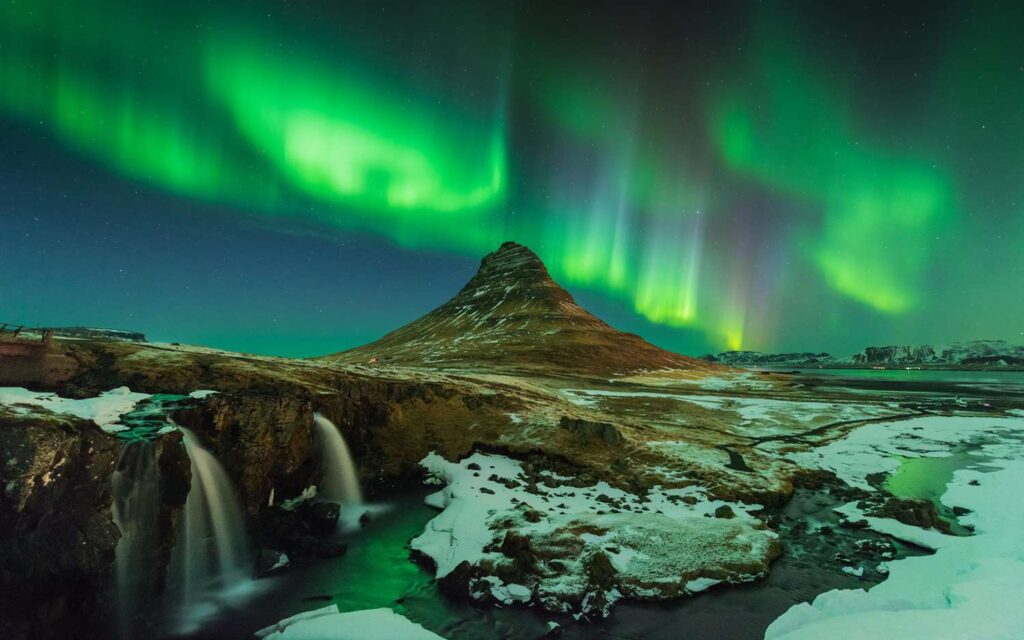
Northern Lights:
If you’ve ever looked up at a polar night sky and seen it ripple with green, violet, or pink waves, you’ve witnessed one of Earth’s most breathtaking natural wonders — the Aurora Borealis, also known as the Northern Lights.
However, what precisely is the cause of this stunning phenomenon? And where can you witness its splendor?
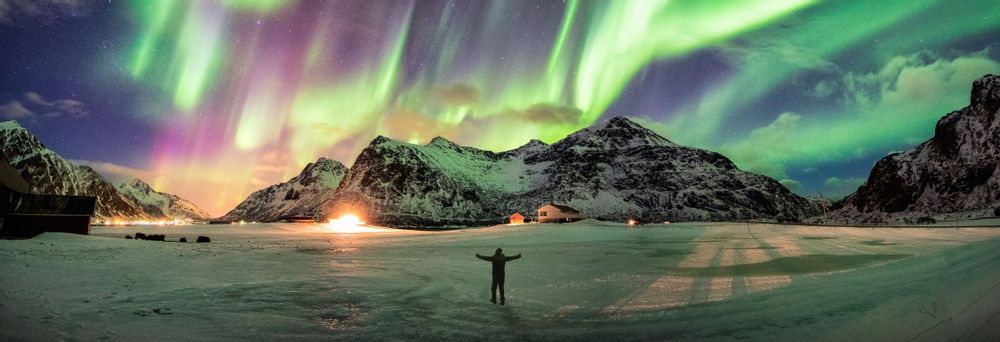
Aurora Borealis: What Is It?
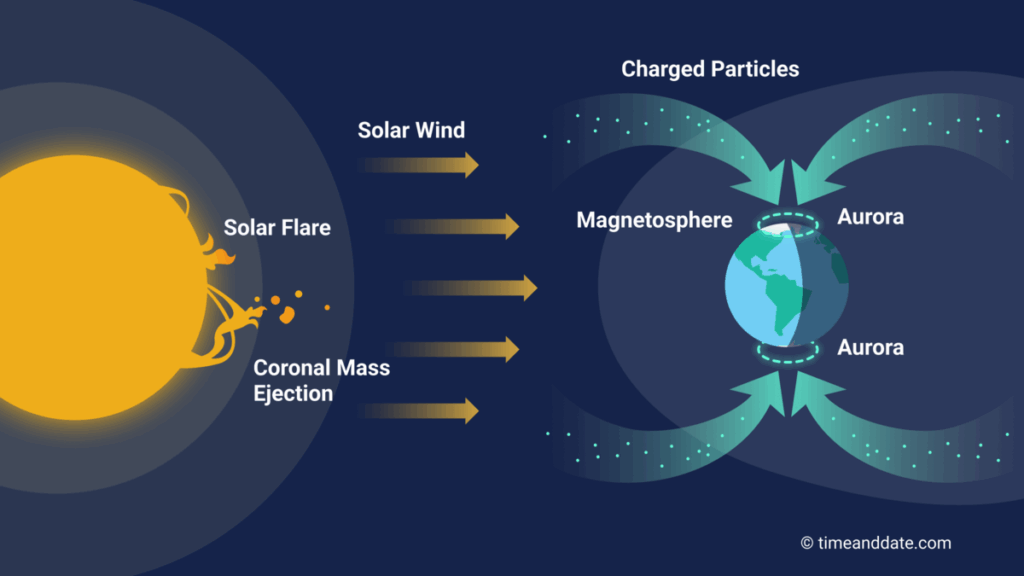
A natural light show known as the Aurora Borealis takes place in the northern regions, mostly in the vicinity of the Arctic Circle. It is brought on by charged particles from the Sun, primarily electrons, colliding with gases in the upper atmosphere of the Earth. The Earth’s magnetic field directs these particles toward the poles, where they interact with gases such as nitrogen and oxygen to release energy in the form of bright light.
Where Can You See It?
To see the Northern Lights, you need clear, dark skies and to be near the auroral oval — the ring around the magnetic poles where auroras are most likely.
Top Aurora Hotspots:
- Tromsø, Norway
- Lapland, Finland
- Kiruna, Sweden
- Reykjavik, Iceland
- Yellowknife, Canada
- Fairbanks, Alaska (USA)
- Murmansk, Russia
The Solar Connection
Solar activity is directly related to auroras. Large volumes of charged particles are released by the Sun during solar storms or coronal mass ejections (CMEs), which amplify auroral displays on Earth. Even farther south than typical, the auroras might be visible if the Kp Index, a gauge of geomagnetic activity, reaches 5 or higher.
A Touch of Myth & Magic
For centuries, the Northern Lights have inspired legends and lore. The Sámi people of Scandinavia believed the lights were the souls of the dead. In Inuit mythology, they were thought to be spirits playing ball with a walrus skull. Whether seen through the lens of science or story, auroras remind us how connected Earth is to the cosmos.
Ready to chase the lights? Let the skies surprise you.