Sprites Sky:
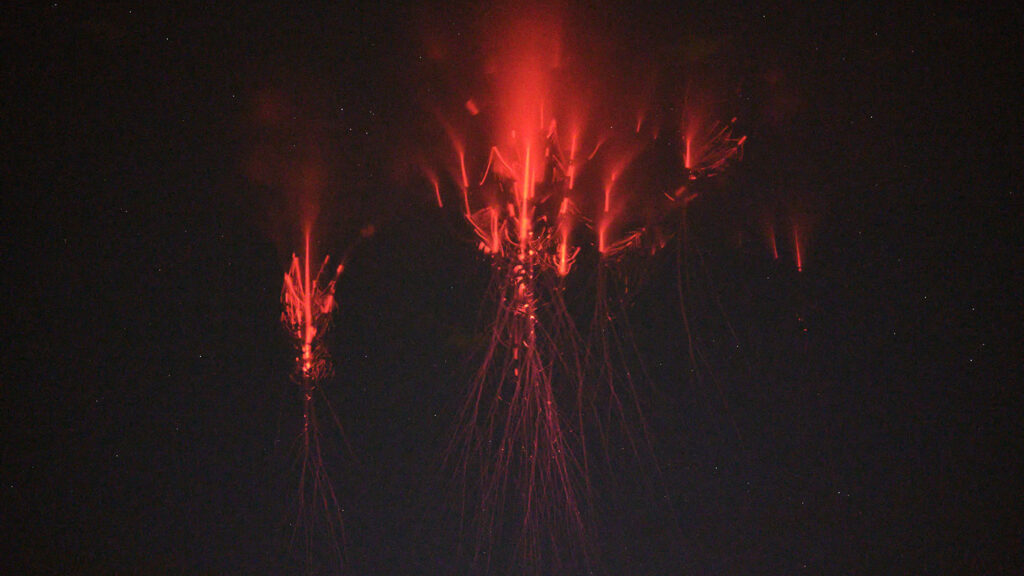
Lightning is frequently thought of being a loud, brilliant, and spectacular descending force. What if we told you, however, that there is another type of lightning that flashes high into space, flashing red and disappearing in an instant? One of the most enchanted and enigmatic phenomena in our skies are these brief bursts of light, known as sprites.
Sprites: What are they?
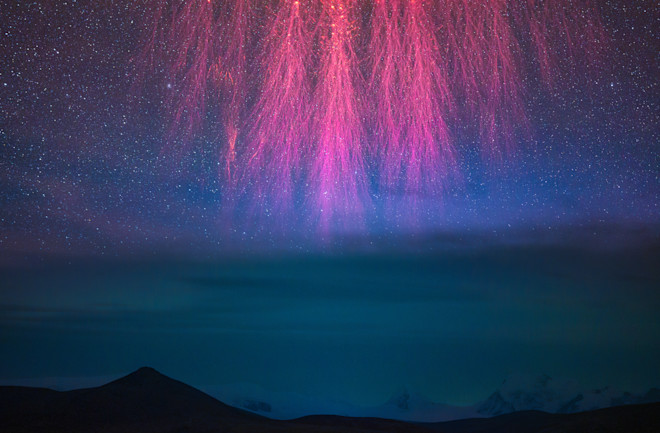
Sprites are enormous, bright electrical explosions that happen in the mesosphere, high above thunderstorm clouds, between 50 and 90 kilometers (30 and 55 miles) above the surface of the earth. Sprites shoot upward into the atmosphere, sometimes reaching heights of over 90 km, in contrast to normal lightning, which strikes downward.
They are very short, lasting only a few milliseconds, and frequently have a columnar, carrot, or jellyfish structure. Usually glowing reddish-orange, they might occasionally have bluish tentacles underneath.
Key Facts:
- Caused by powerful positive lightning strikes from storm clouds to the ground
- Occur in clusters or groups
- Can span tens of kilometers wide
- Not visible with the naked eye under normal conditions — but can be photographed with the right gear
How are Sprites created?
Strong electric fields in the high atmosphere cause sprites. The sprite is a fast discharge that happens when a strong lightning strike below (often positive cloud-to-ground lightning) upsets the electrical equilibrium above the storm.
Consider them to be the electrical release valve of the sky, regulating the powerful energies released during a thunderstorm.
Where and When Can You See Sprites?
Sprites are rare, but sightings are becoming more common thanks to better cameras and observational tools. They typically occur during large thunderstorm systems and are best seen under very dark skies.
Best conditions:
- Warm months when thunderstorms are frequent (May–September)
- High-altitude locations with a clear view of distant storms
- Low light pollution areas — preferably far from city lights
Sprites have been observed in:
- The central U.S. (nicknamed “Sprite Alley” from Texas to Nebraska)
- Europe, especially over France, Italy, and parts of the Mediterranean
- Tropical regions during monsoon or cyclone seasons
- India, in rare high-intensity thunderstorms
The Significance of sprites
Scientists researching the upper atmosphere and the relationships between space weather and Earth’s weather systems value sprites in addition to their aesthetic value. They belong to a group of phenomena called Transient Luminous Events (TLEs), which also includes halos, elves, and blue jets.
Sprites serve as a reminder of how much we still don’t know about the electrical environment of our planet. They conflate lightning with the universe, weather and space.
Is it Spirits or Sprites?
Strange lights in the sky were frequently ascribed to ghosts or gods in ancient cultures. This is reflected in the name “sprite,” which is taken from fairy or legendary air spirits. You’ll see why when you view a sprite photo, which is luminous red and has tendrils extending toward space.
They resemble electric angels dancing at the border of Earth’s atmosphere, or phantoms of the sky.
Sprites, which are brief, silent, and almost imperceptible to the unaided eye, are among the most enchanted occurrences in Earth’s skies. They serve as a reminder that even during the most intense storms, lights can be seen rising skyward and creating amazing connections between Earth and space.
So the next time you see a thunderstorm rumbling in the distance, take out your camera and gaze up at the sky. There’s a chance that you’ll see a sprite’s crimson whisper dancing far above the clouds.
They flicker in silence, flash like spirits, and vanish into the stars.