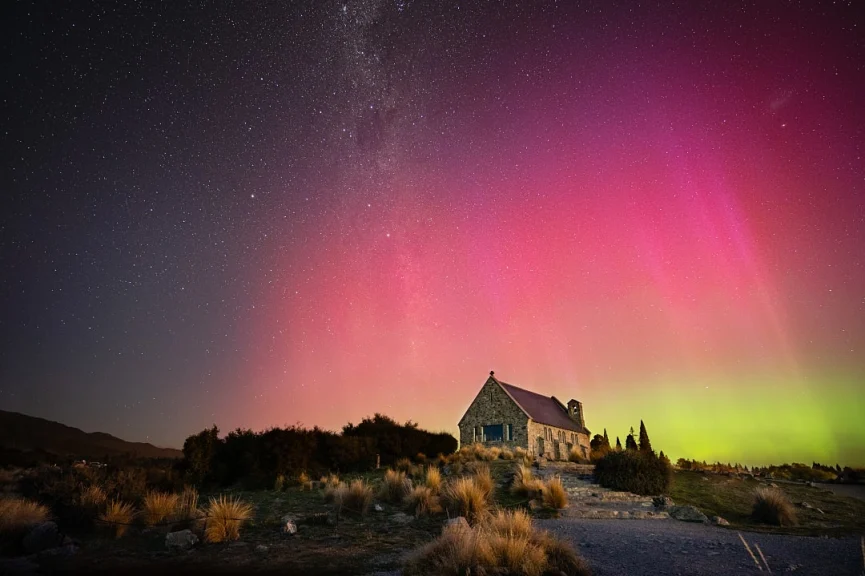
Most people think of the renowned Aurora Borealis when they see luminous sky and glistening curtains of light. However, few are aware that the Southern Hemisphere’s sky are graced by its equally beautiful counterpart. Meet Earth’s lesser-known but equally amazing celestial show, the Aurora Australis, also known as the Southern Lights.
The Aurora Australis: What is it?
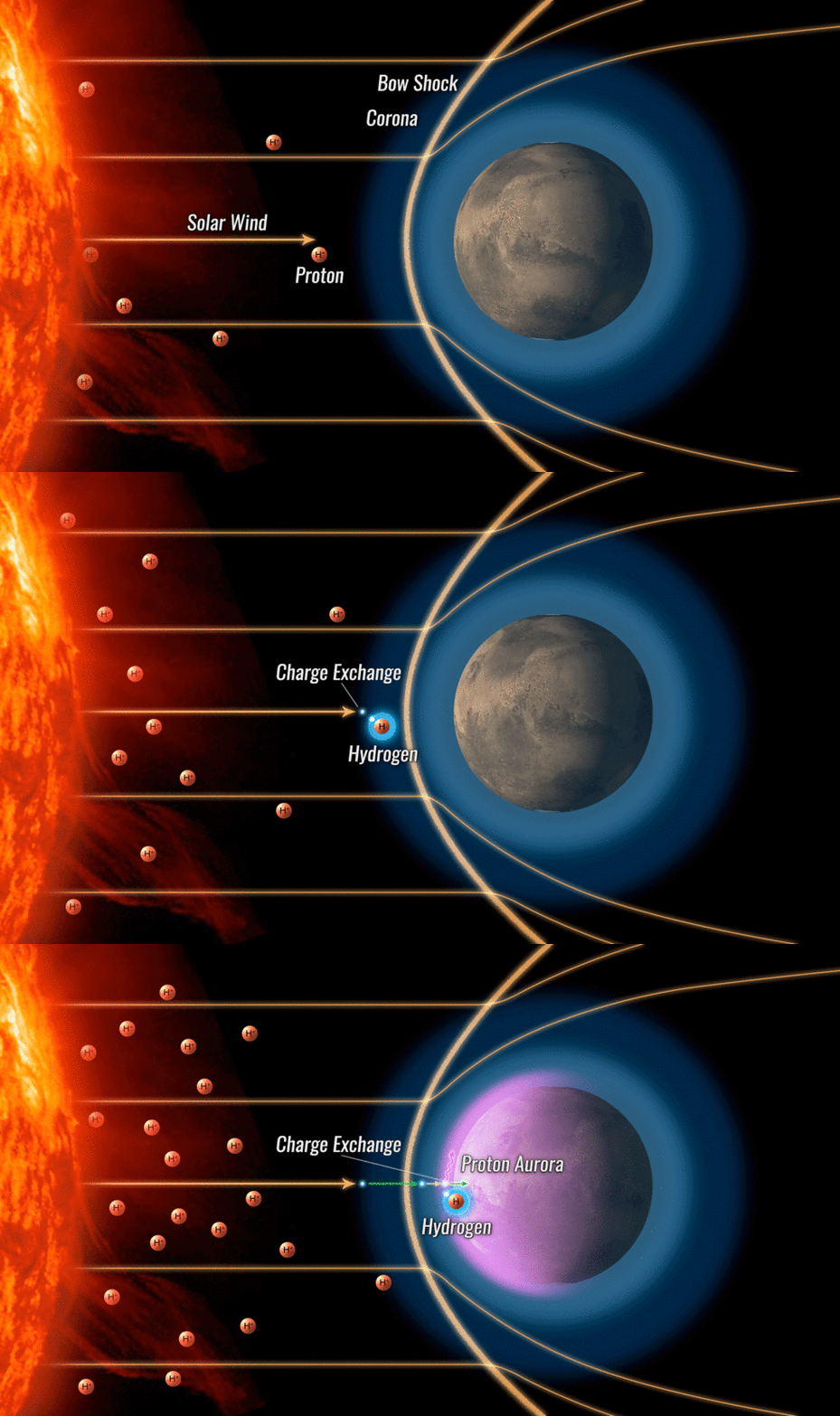
The same strong energy that powers the northern counterpart, the solar wind, is responsible for the natural light display known as the Aurora Australis, which takes place close to the South Pole.
This is how it operates:
During solar flares or storms, the Sun releases charged particles, primarily protons and electrons.
As these particles approach Earth, the magnetic field of the planet pulls them toward the poles.
Vibrant sky displays are produced when they collide with gases like as nitrogen and oxygen in the high atmosphere, releasing light.
Where Can You See the Aurora Australis?
Unlike the Northern Lights, the Aurora Australis is harder to access, since much of it happens over the Southern Ocean and Antarctica. But there are still some spectacular viewing spots for lucky observers:
Best places to spot it:
- Tasmania, Australia – Especially South Arm Peninsula, Mount Wellington.
- South Island, New Zealand – Around Queenstown, Dunedin, or Stewart Island.
- Antarctica – Best views from research bases like McMurdo Station.
- Falkland Islands – Occasionally visible during high solar activity.
- South Georgia Island – Remote, but rewarding.
Southern Skies & Solar Storms
During times of high solar activity, particularly during solar maxima in the Sun’s 11-year cycle, the Aurora Australis intensifies. Auroras can be seen from more accessible locations, such as southern New Zealand or Victoria, Australia, when strong solar flares drive them closer to the equator.
These displays can be predicted with the aid of Kp Index ratings and Aurora forecasting techniques. In southern latitudes, good aurora visibility is typically indicated by a Kp Index of 6 or above.
A Light Show Wrapped in Mystery
In Māori mythology, the aurora is called “Tahu-nui-a-rangi” — the great burning of the sky. For Antarctic explorers, it was a silent companion during long, frozen nights. Even today, the Aurora Australis continues to inspire awe, wonder, and a sense of deep connection to the cosmos.
Chase the silence. Witness the light. Let the Southern sky tell its story.