Light Pillar Sky:
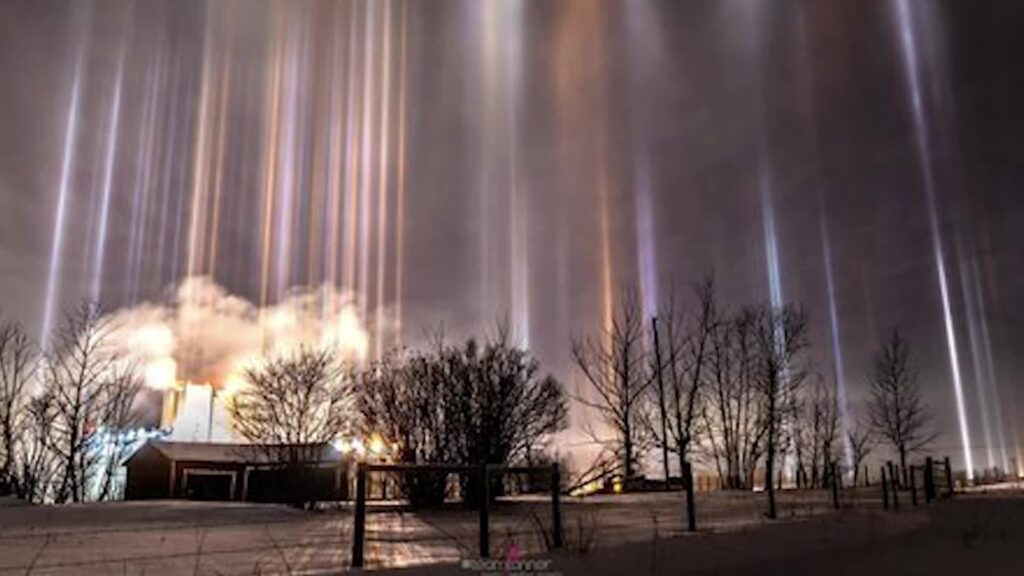
Imagine stepping outside on a chilly winter night and witnessing great, bright columns of light that resemble shimmering ladders reaching for the stars as they extend upward into the sky. These strange beams are not from alien ships or spotlights. Light Pillars are an optical phenomena that occurs naturally.
Light pillars, which are sometimes confused for supernatural phenomena, are actually atmospheric magic. Seeing them is like getting a glimpse of Earth’s secret beauty, which is only visible to the patient and inquisitive.
What Are Light Pillars?
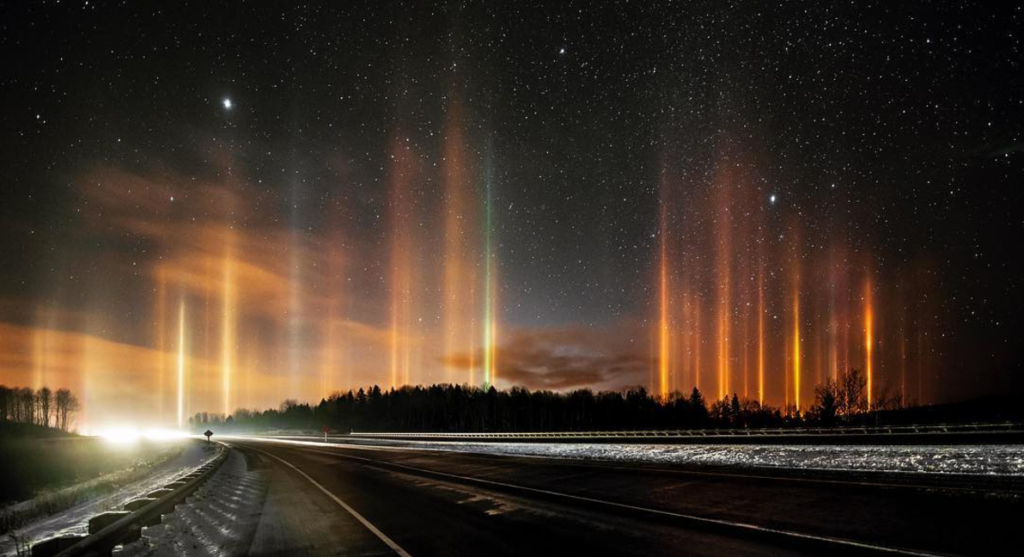
Vertical shafts of light that seem to ascend from or drop toward a bright light source are known as light pillars. Depending on what kind of light they reflect, they can be white, golden, or even multicolored.
The catch is that these pillars aren’t really beams pointing skyward. Usually in extremely cold weather, light bounces off flat, hexagonal ice crystals hovering in the atmosphere to generate this optical illusion.
Like tiny mirrors, these crystals capture and reflect light, creating what appears to be a column of light as it returns to your eyes.
How Do Light Pillars Form?
Light pillars occur under very specific conditions:
Ingredients:
- Very cold air (usually below −10°C or 14°F)
- Flat, plate-shaped ice crystals floating in the lower atmosphere
- A strong light source, such as: The Sun (creating a solar pillar), The Moon (a lunar pillar), Streetlights or even car headlights
The crystals reflect the light vertically toward the observer, giving the illusion of towering beams of light rising into the sky or descending from the heavens.
Light Pillar Types
Depending on the light source, there are several types of light pillars:
- Solar Pillars: Observed when the Sun is low on the horizon, either immediately before sunrise or after sunset.
- Lunar Pillars: These are less noticeable and appear on bright, full-moon evenings and are caused by moonlight.
- Artificial Light Pillars: Usually observed in urban areas during cold weather, these are caused by headlights, streetlamps, or city lights.
Although each type glows differently, they are all based on the same idea: light bouncing off frosty mirrors in the sky.
Where and When Can You See Them?
Best Locations:
- Canada
- Alaska
- Russia
- Scandinavia (Sweden, Norway, Finland)
- Northern India and the Himalayas (on rare, cold winter nights)
Best Conditions:
- Extremely cold temperatures
- Calm, clear nights
- Low wind to allow ice crystals to hover steadily in the air
- A light source near the horizon
If you see a pillar of light reaching up from a streetlamp on a freezing night — congratulations! You’ve spotted a rare light pillar.
The Magic and Meaning of Light Pillars
A celestial bridge connecting the sky and Earth, light pillars appear unearthly to many. They have been associated with spirits, gateways, and divine signs in legend, and even now, people who are fortunate enough to see them are frequently taken aback by their unexpected appearance.
In terms of science, they are a stunning illustration of atmospheric physics and optics. In a spiritual or emotional sense, they resemble nature’s light calling back to us.
Light pillars serve as a reminder that the world may still astonish us with its unexpected beauty, even on the coldest, darkest nights. They shine quietly, beckoning us to slow down and gaze up, rather than roaring like thunderstorms or dancing like auroras.
Therefore, in winter, if you’re outside on a chilly night and you see vertical rays cutting through the air, stop, observe, and perhaps take a picture. One of nature’s most serene and captivating wonders has just been revealed to you.
In the stillness of winter, light finds a way to rise.